

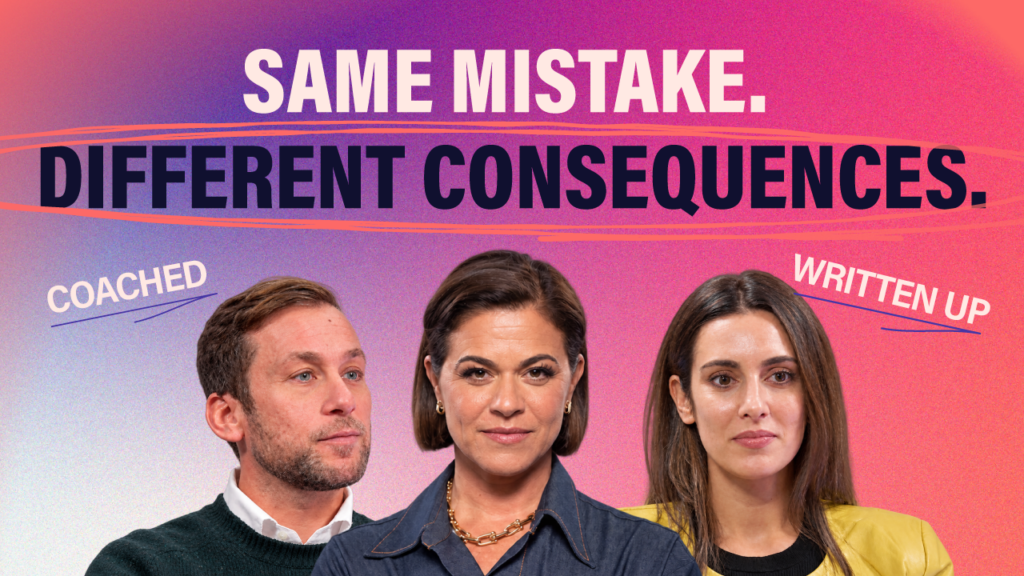

How do you prove race discrimination at work when nobody uses a slur or openly admits that race influenced a decision?
In this episode of Not in the Newsletter, Christina Phillips is joined by employment attorneys Jesse Weinstein and Morgan Mickelesen to explain how workplace race discrimination may be established through patterns, comparator evidence, performance records, witness accounts, coded language, microaggressions, and unequal treatment.
The conversation examines same-race discrimination, tokenization, stereotyped criticism, algorithmic layoffs, and the difference between knowing something is wrong and having evidence that can prove it. Jesse and Morgan also discuss real cases involving racial slurs and imagery, along with what employees should document when discrimination is more subtle.
In this episode, you will learn:
- Why race discrimination does not require an explicit slur or confession
- How attorneys compare assignments, discipline, reviews, and promotion decisions
- Why terms such as “aggressive,” “angry,” or “not the right fit” may require closer examination
- How employees of the same race can still discriminate against one another
- How discriminatory decisions can be hidden inside supposedly neutral algorithms
- Why contemporaneous notes, texts, emails, and witness accounts may matter
- What employees should consider before resigning or recording workplace conversations
- When speaking with an employment attorney may help clarify what is happening
Race discrimination does not always announce itself. Understanding the pattern can be the first step toward understanding whether an unfair workplace experience may also involve unlawful discrimination.
Most company newsletters highlight promotions, awards, and milestones. They rarely tell the stories behind workplace challenges: reporting harassment, facing discrimination, experiencing retaliation, requesting accommodations, or taking leave to care for yourself or a loved one.
Created by William K. Phillips, founder of Phillips & Associates, and hosted by Christina Phillips, Not In The Newsletter explores the workplace realities employers don’t talk about. Through conversations with attorneys, therapists, advocates, and other experts, the podcast examines employee rights, workplace power dynamics, harassment, discrimination, retaliation, mental health, and the challenges that arise when work and life collide.
Whether you’re facing a workplace issue, supporting someone who is, or seeking a better understanding of today’s workplace, each episode offers practical insights and expert perspectives to help you navigate what’s next.
Episode Transcript
[00:00:00] Christina Phillips: How can you prove it’s race? What do you say? What are you looking for?
[00:00:04] Jesse Weinstein: There’s the truth, and then there’s proof, right? Litigation is all about the story that the evidence tells, and sometimes proof is very different than truth.
[00:00:12] Morgan Mickelesen: That documenting and note-taking, even if it’s just to yourself at first, right?
[00:00:17] Morgan Mickelesen: Because having a pattern over time is important.
[00:00:21] Jesse Weinstein: It’s an algorithm. How could it be biased? But where is the algorithm drawing from, and how are people entered into the pool?
[00:00:38] Christina Phillips: Welcome back to Not in the Newsletter. I’m Christina Phillips, and I’m here today with Morgan Mickelson and Jesse Weinstein, and we’re gonna be discussing racial discrimination, how it shows up without a racial slur, and what it looks like with the racial slur. So they are both very experienced in this area, and we’re gonna hear about some of the cases that [00:01:00] they’ve settled and some of the cases that they’ve worked on that are in the public record.
[00:01:03] Christina Phillips: So thank you so much for joining me, and let’s get into it. I understand you’ve both worked on these cases, and Jesse, you recently had something that you won. It went to trial, and it was a race discrimination case. Is that right?
[00:01:17] Jesse Weinstein: That’s right.
[00:01:18] Christina Phillips: Okay. Can you tell us a little bit about what happened?
[00:01:21] Jesse Weinstein: Sure. Um, so my client was a porter, uh, at Jazz at Lincoln Center, and it was a very long time coming for the trial.
[00:01:29] Jesse Weinstein: It was in 2022, jury trial in Southern District of New York, and the, the central crux of the case was that his non-Black supervisors were continually using the N-word around him. And it was a really interesting case because they were not white supervisors. They were Dominican. Uh, they, they claimed to be Afro-Latino, um, and that it was just slang and that it wasn’t meant in a racist way, um, and that they were…
[00:01:55] Jesse Weinstein: it was friendly banter. Uh, with, with John, with our client, [00:02:00] he still took serious offense to it, so much so that he started recording it. And I think the icebreaker for the case was that the ro- one recording we had, it was being used in the context of an argument. They were screaming at him to do something.
[00:02:14] Jesse Weinstein: They were so mad in that recording, and I think it took the air out of their sails to be able to say, you know, “Listen, it was just friendly banter. We talk to the people we love like this.” So that, that was really the, the crux of the trial. He complained about it. Nothing was done, and it was just used so loose-lipped throughout the workplace that the actual supervising harasser who used the N-word repeatedly actually used it on the stand.
[00:02:39] Jesse Weinstein: My, my co-counsel, Greg Kirschenbaum, actually got him to te- to say it during his own testimony, and then on summation, we wrapped it up with a bow and said, “Well, this is a federal courthouse, not, not a warehouse where all the porters are. How do you think he behaves there?” Right. “He’s going to do it here.”
[00:02:53] Christina Phillips: Right. So that’s sort of almost not a slam dunk per se, but the racial slurs were issued [00:03:00] and he took offense. But what does it look like? I mean, that’s a very clear case, you know, for the listeners, but what does it look like when the slurs aren’t being used? How does that show up? I mean, are we… What, what would you say to your client?
[00:03:17] Christina Phillips: How can you prove it’s race? And what do you say? What are you looking for?
[00:03:22] Jesse Weinstein: I think that would’ve made my trial much more complicated. I think it’s, uh, when they heard the recording, the jury, they were very much moved by it, very uncomfortable listening to it, and there were all, people of all nationalities and backgrounds and, and makeups on, on the jury.
[00:03:39] Jesse Weinstein: Um, so when you remove that sort of overt racism from a case, it becomes much more complicated because there, there’s something called microaggressions, which a lot of people don’t think amounts to race discrimination, more people than you think in one of the most plaintiff-friendly jurisdictions in the country.
[00:03:55] Jesse Weinstein: I know this because we get pushback on this from defense attorneys all the time. [00:04:00] So we really have to look closely at, at How our clients are being treated versus their, their counterparts who are in similar positions but not the same race. The, the race and background of their supervisors or the people harassing them.
[00:04:14] Jesse Weinstein: Um, the, the, the patterns and the performance history of the client is, is very relevant because that’s the first thing defense attorneys usually attack. But with, with any help, we can sort of-
[00:04:26] Christina Phillips: Navigate … navigate. And see what is, what is happening maybe to one race and what’s happening to another race. I mean, do you look at what other people are, you know, other performance things and promotions that maybe somebody who is a different race received versus your client who is claiming the discrimination?
[00:04:45] Morgan Mickelesen: Yeah, absolutely. We can always look at comparators. It’s a difficult, um, thing for a plaintiff’s attorney to do because sometimes we don’t have the statistics of racial makeup for every single person. But we talk to our [00:05:00] clients, we try to find out what they have experienced, and then if a case does go into litigation, we’re able to have discovery, right?
[00:05:08] Morgan Mickelesen: And we can request documents from the company. We can request personnel files. We can request all that kind of information on those comparators, and sometimes Jesse can tell you too, we know that companies don’t wanna get into that discovery process because of what will come out. When we get discovery, our case can sh- get strengthened by a mile, right?
[00:05:32] Morgan Mickelesen: So, um, for our clients to feel hopeful that even if they don’t have data upfront, we can go into that discovery process, we can get more information. Um, but you know, Jesse brought up an interesting point about, you know, harassers being of different races. And I think sometimes when we get these potential client calls, they’re saying, “I feel I’m being discriminated against by my boss, but [00:06:00] she’s also Black, so it’s not making sense to me, but I’m telling you my gut feeling is that something is off.”
[00:06:06] Morgan Mickelesen: Our law recognizes that, um, you know, race discrimination can be promulgated by people of the same race or doesn’t always have to look as we necessarily think. So for potential clients or even our current clients to know that we can really build a case up with, um, documentary evidence, with witness statements, and in going through that discovery process and getting more information.
[00:06:30] Christina Phillips: But, you know, you had also raised an interesting point where without the… You had a video or you had a recording?
[00:06:36] Jesse Weinstein: Recording, yep.
[00:06:37] Christina Phillips: But they had said it was just banter.
[00:06:40] Jesse Weinstein: That’s right.
[00:06:40] Christina Phillips: So in any context, does banter fly? Or, uh, joking? “Oh, you know, oh, it was just a joke. I didn’t mean anything by it.”
[00:06:48] Jesse Weinstein: I don’t, I don’t think it flies.
[00:06:49] Jesse Weinstein: I, I don’t think the intent behind the words matters, uh, because if the word on its face i- is hateful… You know, the, the N-word has such a, a negative hi- there– it’s all negative history. There’s [00:07:00] no positive history attributed to the word. So my point to the jury was there is no proper way to use the N-word, not just in the workplace, but anywhere.
[00:07:09] Jesse Weinstein: And, um, you know, and to touch on something Morgan said, there’s the truth and then there’s proof, right? Litigation is all about the story that the evidence tells. And i- and sometimes proof is very different than truth, and it’s really disheartening for our clients who, you know, for example, a, a Black woman who I’m representing who knows, okay, who’s navigated the earth in her own skin and who has felt racial bias in rooms that she has walked in.
[00:07:36] Jesse Weinstein: She knows in her heart that it’s true, but the question’s not whether it’s true, it’s whether I can prove it in front of a jury. So it becomes very complex. But I do think even if discovery might not yield something perfect, companies are really reluctant to engage in the process because we’re gonna go as high up the flagpole as we can and depose those people and send out subpoenas, and they don’t want the chief of HR, [00:08:00] uh, testifying and explaining away somebody’s behavior that they never worked with before.
[00:08:04] Christina Phillips: So, but the thing is, is that if somebody does complain, let’s say to HR, and they say, “Okay, well, we took care of it. We spoke to them,” is that enough? Or do they have to then, you know, wait to see? Um, what’s your advice? Do you… Should they first make that complaint or first call an attorney?
[00:08:23] Morgan Mickelesen: Either way, right?
[00:08:24] Morgan Mickelesen: Um, I think there’s definite benefits to reaching out to an employment attorney before you make your complaint. We can help you. We can sort of, um, help you strengthen your complaint. But if you’ve already complained to HR or to a, you know, supervisor at work, we can get involved at that point too. Um, it can be after you are terminated and after you have already complained.
[00:08:47] Morgan Mickelesen: We really can kind of like analyze each situation for what it is. And yeah, I mean, look, companies are supposed to remediate discrimination, but in reality, sometimes [00:09:00] their remedial efforts just don’t work, right? Like the discrimination continues on or, you know, the person is terminated for, in retaliation for their complaint.
[00:09:09] Christina Phillips: So if somebody were to, you know, call you and say, “I’m being discriminated against,” but they haven’t made a formal complaint to the company, how then do you get proof? How can you prove it?
[00:09:22] Jesse Weinstein: Well, I mean, I, I’ve, I prefer that. I prefer that clients call me early on, right? An architect building something wants, wants clear ground.
[00:09:30] Jesse Weinstein: Uh, the more an employee tries to do on their own based on what ChatGPT or Google says that they should do, um, the more work that we have to do to create less hurdles for them, right? Um, so that just is like a, a baseline, right? But Sometimes you have to help develop the case. No case comes already built.
[00:09:47] Jesse Weinstein: You know, we, you have to build a case. We can advise them on, on how to protect themselves. Um, we can advise them that they should be complaining if they haven’t complained yet. I think that it’s really ideal for someone to call us [00:10:00] when they’re just feeling the feeling, but they haven’t done anything yet, ’cause that’s what we’re trained to do, right?
[00:10:05] Jesse Weinstein: Yeah. I mean, that’s our-
[00:10:06] Morgan Mickelesen: Exactly.
[00:10:06] Jesse Weinstein: This is all we do.
[00:10:08] Christina Phillips: Yeah. Without a slur, I mean, it’s, uh, it must be difficult for you to prove it because you would need to see who was promoted, why they were promoted. Do they have equal work ethics? Were they showing up at the same time every day? Or, you know, something like that.
[00:10:22] Christina Phillips: I mean, you know, can you just, you know, show us or, you know, visually how we can visualize how that’s proven?
[00:10:30] Morgan Mickelesen: I think, look, slurs are outright acknowledged by the law as discriminatory, right? And But none of this exists in a vacuum. Like Jesse was saying, our clients have navigated the world. They have grown up, um, experiencing racism.
[00:10:52] Morgan Mickelesen: They’ve experienced it in the workplace. They’ve experienced it maybe in housing, in school, in, you know, [00:11:00] recreation. Yeah, it could be, it could be any aspect of life. And so they come with all this, like, learned experience about how to recognize it. And so for us, we’re hearing someone’s experience, and we’re also tuning into these things that may not be slurs, but may be stereotypes, right?
[00:11:20] Morgan Mickelesen: Um, and that takes a lot of different forms. Um, I hesitate to even reiterate them in this way because I think sometimes it just kind of like reinforces beliefs. But our clients come to us, they say, look, they, they maybe haven’t used the N-word, but they’re, they’re using these stereotypical things, um, you know, and, and it’s just not true.
[00:11:42] Morgan Mickelesen: Everyone else also shows up at 9:15 in the morning, but it’s only a problem when I do it, right? And so that’s the type of thing where, like we were talking about, maybe we don’t have perfect information, but I mean, our clients know if they’re the only Black woman on their team or they’re the only Black man in the, [00:12:00] you know, warehouse and everyone else is, you know, some other race.
[00:12:04] Morgan Mickelesen: So, um, certainly different things that we can talk to our clients about that may not be as overt.
[00:12:12] Jesse Weinstein: One, one pattern I see that’s pretty covert, and I’m sure you’ve seen this before, particularly with Black women in executive positions, is tokenization, right? You have executive-level experience women joining Fortune 500 companies, huge press releases, look who’s joined our team.
[00:12:29] Jesse Weinstein: She’s gonna be the VP of, of A, B, C, and D, whatever her job title is. And then they get their office, and then they don’t get invited to one meeting, and then they don’t get one task, and they’re basically lame ducks. And the one purpose that they were hired for was just to show the world, look how diverse our company is, because there’s reporting obligations for these big companies too.
[00:12:49] Jesse Weinstein: They actually, every once in a while Congress does an audit to see, to make sure that leadership is diverse, uh, in major companies. Uh, you know, there’s, there’s so many different ways that [00:13:00] companies discriminate without using a slur.
[00:13:03] Morgan Mickelesen: They seek to benefit off of, um, you know, the backs of certain people. And, you know, to Jesse’s point, we sometimes even will see it in a way where, let’s say there is a Black woman in a, in an executive position, and then another Black woman joins in some completely unrelated department.
[00:13:21] Morgan Mickelesen: And they’ll say like, “Oh well, you know, you should talk to this person.” And it’s like, well, I don’t have anything to do with their job function- Right, right, right, right … so that feels a little funny to me. Um, and you know, this can also take different forms. There can be, you know- Jokes made about a person having an accent, right?
[00:13:41] Morgan Mickelesen: Um, we’ve heard, you know- Hair comments. Yep, exactly.
[00:13:45] Jesse Weinstein: Your hair looks unprofessional.
[00:13:46] Morgan Mickelesen: Unprofessional.
[00:13:47] Jesse Weinstein: And it’s like, this is my hair. I can’t do anything besides shave it off. Right. Mm-hmm. Um…
[00:13:50] Morgan Mickelesen: Yep, and in New York City, you’re, you’re protected against that. And we talked about jokes a little bit earlier, but the law recognizes that jokes can be [00:14:00] discriminatory.
[00:14:00] Morgan Mickelesen: Just it could be a joke, but let’s say the joke uses a racial stereotype, a racial slur, it’s unacceptable
[00:14:08] Christina Phillips: At harassmenthelp.org, we know that employees often stay silent when mistreatment is difficult to name or prove. Knowledge is power. You don’t have to file a lawsuit to get informed about your rights.
[00:14:20] Christina Phillips: Visit harassmenthelp.org to learn more and protect your career. I think you both had some cases on public record that you might be able to talk about.
[00:14:29] Jesse Weinstein: Yeah.
[00:14:29] Christina Phillips: Where they were not necessarily… They were kind of overt from what I understand, these-
[00:14:35] Jesse Weinstein: Yeah …
[00:14:35] Christina Phillips: these situ- so it’s not just words.
[00:14:37] Jesse Weinstein: Right. And that’s an interesting…
[00:14:38] Jesse Weinstein: I- it’s really an interesting phenomenon because you would think the more overt race discrimination cases would settle because companies are afraid of reputational harm, right? It’s… I c- I’m thinking of three trials that came through our firm where every single one of them had literally outrageous, overt racist slurs involved.
[00:14:57] Jesse Weinstein: Uh, the Partavoni trial that I tried, [00:15:00] as I explained, that, uh, had the recording of the N-word. Um, there was a Strive, uh, the Strive case, um, where there was a recording of the N-word repeatedly. Uh, there was a Fisher case where the plaintiff in that case was, um, literally juxtaposed, uh, next to the Planet of the Apes characters, and that was posted on Instagram.
[00:15:18] Jesse Weinstein: That… A- and it’s… And, you know, I think when you see cases like that go to trial, that tells me that there’s somebody on the other side who wants to light the barn on fire while they’re standing inside. Ego gets in, ego gets in the way. Um, they just don’t want to admit that they’re racist or that they aided and abetted it, or they didn’t do something about it.
[00:15:34] Jesse Weinstein: “I’m gonna fight this because this is a misunderstanding.” Um, but really the ones that, in my view, are, are settling outside of court are the ones that are more systemic. Um, you know, I think algorithmic discrimination is something I’ve been really-
[00:15:48] Christina Phillips: Ooh,
[00:15:48] Jesse Weinstein: explain
[00:15:49] Christina Phillips: that
[00:15:49] Jesse Weinstein: a little bit … really interested in. I know.
[00:15:50] Jesse Weinstein: It’s a big word. Algori- yeah. I can’t believe I said that so smoothly. But it’s a tongue twister. But a lot of these big companies now, what they’ll do when they do mass layoffs or reductions [00:16:00] in force, they’ll just do it automatically. There’s a, you know, every… There’s a pool, and that’s the problem, but they’ll do it without, you know, a board meeting decision on the…
[00:16:10] Jesse Weinstein: And going through a list. It’s automatic. And so- But they’re
[00:16:13] Christina Phillips: not doing it based on race. They’re doing it as a pool.
[00:16:16] Jesse Weinstein: They’re doing it as a pool because it, on its face, it looks like there’s not, there’s no foul play going on. Oh, okay. There’s no bias. Mm-hmm. That it’s, it’s an algorithm. How could it be biased?
[00:16:23] Jesse Weinstein: But where is the algorithm drawing from, and how are people entered into the pool? The answer is it’s not the whole company that’s put in the pool. It’s managers can actually submit names based on perf- on performance reviews to enter the pool. And if you can imagine, a lot of managers use that to their advantage in, in nefarious ways.
[00:16:45] Jesse Weinstein: Um, if I’m a manager and you complained about me, um, for race discrimination, and you had a subpar performance review, well And I might get in trouble, but I can submit your name and my role into that algorithm and you can get laid off. [00:17:00] And by the way, it’s not biased ’cause it’s an algorithm. So I see a ton of that with big companies, and I’m trying to crack the code on it.
[00:17:06] Jesse Weinstein: I did it in one case, but, you know, that was actually really pretty strong evidence to get the case resolved because when you ask the right questions, you get, you get the truth.
[00:17:16] Christina Phillips: So they’re trying to protect themselves by buffering the person they really wanna fire, but they’re afraid of race discrimination, so they’re throwing a few more people into the pool.
[00:17:25] Christina Phillips: Is that sort of the gist of it?
[00:17:27] Jesse Weinstein: Yeah. Uh, you know, I, I hate to use this phrase. Another, another attorney once said this to me. It’s like throwing the baby out with the bathwater, right? They, they, they will loop the people who are protecting themselves into this and say, “Listen, this is totally random. It’s coincidence.”
[00:17:41] Jesse Weinstein: Um-
[00:17:41] Christina Phillips: But if you’re seeing it time and time and time again, then could-
[00:17:44] Jesse Weinstein: I’ve, I’ve seen it a ton.
[00:17:45] Christina Phillips: Mm-hmm.
[00:17:45] Jesse Weinstein: I, I’ve seen it… I’ve gotten that so many times, um, um, cases with big companies, Fortune 500 companies. Um, and I don’t even know if it’s well-intended. I wonder if it’s like, you know, um, I can always speculate.
[00:17:58] Morgan Mickelesen: Yeah, we’re looking at impact [00:18:00] of things, right? Like, even if the company may have a non-discriminatory reason, like Jesse was saying, um, then we are able to tr- to try to prove that that’s not true, right? What was the impact of these decisions? Who did it actually affect? Um, so that’s really important for us.
[00:18:18] Christina Phillips: And so if, you know, the person is staying in their job, but they feel like it’s happening, and they don’t really have a strong case just yet, what would you tell them to start doing so that they can then prove it?
[00:18:32] Jesse Weinstein: I mean, if, if they’re going to complain, if they feel like they wanna raise a concern, don’t just do it verbally, because it’s always gonna be your word versus theirs.
[00:18:42] Jesse Weinstein: Nobody’s ever gonna admit that that complaint happened. I’ve never, in my whole entire career, had somebody admit that a, a harasser admitted a protected complaint that was verbally. So text messages, emails. Um, one thing Morgan touched on earlier, [00:19:00] how, how plaintiff-friendly our laws are in New York City. I mean, a low-level manager who is supervising somebody and discriminating against them can impute liability to the whole entire company, even if everybody above that manager has no clue what’s going on, and they can…
[00:19:15] Jesse Weinstein: And their complaint can be a protected complaint for the purposes of knowledge, right? If I’m, if I report race discrimination to a very low-level manager, then I’ve reported it to the company.
[00:19:25] Christina Phillips: Okay. Good. That’s great. I mean, that’s really helpful in New York, and so it doesn’t seem like it’s making it happen less, though.
[00:19:32] Jesse Weinstein: Yeah, I mean, I say that, I say that just because, you know, people are afraid to put things in writing to, like, HR, which I understand. People are really nervous to even call lawyers. I don’t know, like, people are even nervous to sign retainers. But it’s a lot easier to text your direct boss, “Hey, I really don’t appreciate the way Bob is treating me.
[00:19:48] Jesse Weinstein: He’s using the N-word.” I think it’s bec- you know. Um, and I, I would say that that’s something that listeners should really consider, like complaining to your direct boss. It’s jurisdictional, but in New York City, [00:20:00] 1,000%.
[00:20:00] Christina Phillips: Okay. And then as far as… You’d mentioned you had a recording. Would you suggest recording?
[00:20:06] Christina Phillips: Is that sort of… I mean, I think in the state of New York, it’s allowed to-
[00:20:11] Jesse Weinstein: Yeah. With an asterisk caveat. Mm-hmm. That’s the annoying lawyer answer, right? Uh, read your handbook before you start recording. Mm-hmm. Because companies may have internal policies that say if you record another employee without their knowledge, it’s automatic termination for cause.
[00:20:26] Jesse Weinstein: And so- Listen, that doesn’t scare me. If I, if somebody comes to me with a recording with something really salacious and bad on it, and then they get fired for violating the policy, I’m like, “Okay, run with that argument in front of the jury. They’re still gonna hear the recording at the end of the day.” But don’t create, you know, uh, hurdles for yourself without at least knowing the lay of the land.
[00:20:46] Jesse Weinstein: Make sure you’re not violating a specific rule. That’s when you call a lawyer and you navigate around it.
[00:20:51] Christina Phillips: Right. Okay. Awesome. Thank you. If this conversation helps you understand what discrimination can look like when you’re at work, [00:21:00] subscribe to Not in the Newsletter on YouTube. We’re releasing new episodes and practical clips about the workplace issues companies rarely explain.
[00:21:09] Christina Phillips: So I have a couple of different scenarios too that I’d love to get your thoughts on. So if you can just bear with me as I read it, I’d love to hear from you and what you think about what you should do and if you are the employee. So it says, “I’m a Black employee who keeps getting the least desirable assignments.
[00:21:26] Christina Phillips: I was formally disciplined for missing a deadline, but two coworkers with similar roles who missed deadlines were coached instead. I’ve also been passed over for a promotion with my manager saying I’m not the right fit. No one has made a direct comment about my race. What facts would help an attorney assess whether this is discrimination?”
[00:21:44] Morgan Mickelesen: This is a tough case, right? This is something that people call when they’re experiencing it, and it’s a good time to call a lawyer, right? Because you’re currently going through this, and I think something we were touching on earlier is just kind of that documenting and note-taking, [00:22:00] um, even if it’s just to yourself at first, right?
[00:22:02] Morgan Mickelesen: Because having a pattern over time is important. Um, I think that in this case, look, a failure to promote is a difficult claim to prove. The company can have a lot of different reasons why the person that they did promote is more qualified, has different experience than you. But what matters is, first of all, someone’s subjective feelings about it.
[00:22:27] Morgan Mickelesen: But let’s think about the little things over time, right? Were there those, like, microaggressions happening? Is there something, you know, that you can see is not happening to others, like that evidence of, you know, a coaching versus a write-up. So yeah, a good time to get an attorney involved so that we can start documenting things, and if it gets to that, submitting a formal complaint.
[00:22:50] Jesse Weinstein: I agree with that. I, I think it’s a tough case on those facts, um, especially if they quit before they come to us or, you know, because I’m noticing a lot of companies are [00:23:00] more reluctant to fire people who raise claims of race discrimination. But if somebody goes through those facts and then says enough is enough and quits, it’s probably not one that I would be able to help on, and I, I, I think Morgan would probably agree that’d be a tough-
[00:23:13] Christina Phillips: If they’ve
[00:23:13] Jesse Weinstein: quit the job
[00:23:13] Jesse Weinstein: hill to climb if they quit.
[00:23:14] Christina Phillips: Mm-hmm.
[00:23:15] Jesse Weinstein: So if you’re still there, this is back to what I said earlier, the, the truth versus the proof, right? It’s really, really… How, how are you gonna prove to a jury that on those facts, it’s, it’s because of your race that there’s racial animus there? So we would help crystallize a complaint because even if the discrimination is shaky, but you have a crystallized race discrimination complaint and they retaliate against you for filing it, um, well, it’s a different ballgame.
[00:23:38] Jesse Weinstein: Now, now we’re cooking with heat.
[00:23:40] Christina Phillips: Oh, okay. So but just to follow up a little bit on quitting, is there any time that they can quit and then still bring a case?
[00:23:48] Jesse Weinstein: There is. Um, it has to be really, really bad conditions. Uh, we call that a constructive termination or constructive discharge, which even in New York, I think every- Every jurisdiction in the country, that is an [00:24:00] extremely tough hill to climb.
[00:24:02] Jesse Weinstein: It’s a big battle because you have to show that the conditions were so intolerable, the discriminatory conditions at that, not, not just being a jerk, ’cause being a jerk’s not illegal. You- They’re the defense about equal opportunity jerks. Um, you know, it has to be tied to the discrimination and so intolerable that you just can’t take it anymore, and- Okay.
[00:24:23] Morgan Mickelesen: And not just you can’t take it anymore, but that a reasonable juror wouldn’t be able to take it anymore- Okay … if they were in your shoes, right? So that goes back to making sure that you do have those notes to yourself about all the different things that happened over many months, right? Because you wanna be able to say, “Hey, this isn’t just, um, one last incident that got me so upset that I quit in the heat of the moment, but really a buildup over time of discriminatory microaggressions or outright discriminatory, you know, acts.”
[00:24:53] Christina Phillips: So just to follow up on quitting, can you tell me a little bit how that looks when somebody does quit and we can say that [00:25:00] that is a termination, that it was constructive legally under the law?
[00:25:05] Jesse Weinstein: Sure. There’s a couple ways that can happen. I think the, the least likely way is if there’s continuing racial slurs, overt racism.
[00:25:12] Jesse Weinstein: Um, I think Morgan’s had a case before with, like, sock monkeys and, and, and really racist stuffed animals were placed. If that sort of intolerable discriminatory environment persists, uh, I think the law protects you, in my opinion, if you can’t show up to work every day and deal with that. But that’s usually not the way it goes.
[00:25:29] Jesse Weinstein: A- another scenario more, a little more covert, is if you file an HR complaint, for example, and then you’re still forced to work with the, the same harasser directly. Now, that’s not automatic, right? I always say there’s an asterisk, which is the annoying lawyer answer, right? But, like, if, if it’s not possible for you to work and do the job without encountering that person, then that makes it tough.
[00:25:52] Jesse Weinstein: That still makes it really tough. We would still consider a constructive termination ca- claim even if the discrimination was really actionable, by the [00:26:00] way. It, we don’t just focus on the, the exit. But it, it does make it tough. So I, I think you have to look holistically at how does it impact the company to separate the parties.
[00:26:10] Jesse Weinstein: If we have, you know, 10 different supervisors who do the same thing- And this person can report to them instead, but they’re still making this person work with the person against whom they filed the complaint. That’s actionable in my opinion.
[00:26:23] Christina Phillips: So but what about if they quit and then they come up, you know, and, and they’re found, the person who was doing the harassing, you know, they’re found guilty and everything.
[00:26:32] Christina Phillips: Can the person be reinstated into their job, but under a different supervisor? Do you ever see anything like that go on?
[00:26:39] Jesse Weinstein: So, uh, I’ve, I have never actually seen some- Reinstatement is very- … a supervisor get dismissed
[00:26:45] Morgan Mickelesen: after, uh- Very rare. Yeah. Right … ‘
[00:26:47] Jesse Weinstein: cause that’s, that goes along with the, the proof, right?
[00:26:49] Jesse Weinstein: There’s a paper trail of that, and they, and a lot of companies I think will, will look at that as a admission of, of guilt to some end, firing somebody after a complaint. Very seldom do I see [00:27:00] a harasser get fired unless it’s, like, something so brazen and so overt that, like, they have no, absolutely no choice.
[00:27:08] Jesse Weinstein: But again, that makes up for, you know, a smaller portion of our cases. So, uh, but yes, there, there are scenarios where an investigation’s concluded. Now, they’ll… They might not terminate the harasser, but they’ll say, “We’ve counseled them.”
[00:27:20] Christina Phillips: Okay. “
[00:27:21] Jesse Weinstein: We’re making them go to, to training, inclu- diversity, equity, and inclusion training.”
[00:27:25] Christina Phillips: Mm-hmm. Okay.
[00:27:26] Jesse Weinstein: But you still have to work for them.
[00:27:27] Christina Phillips: Right.
[00:27:27] Jesse Weinstein: Right. Right. And then they’re sort of in this, like, Cold War era-
[00:27:30] Christina Phillips: Mm-hmm …
[00:27:30] Jesse Weinstein: atmosphere with their boss. Okay. That’s the most likely scenario.
[00:27:34] Morgan Mickelesen: Oh, so that’s, um…
[00:27:36] Christina Phillips: Yeah.
[00:27:36] Morgan Mickelesen: In terms of reinstatement, a lot of our clients don’t wanna go back to the workplace, right?
[00:27:40] Morgan Mickelesen: Mm-hmm. Yeah. Um, they find the conditions to be intolerable. They have no more trust with their-
[00:27:45] Christina Phillips: With their, with their- Yeah, with their employer … employer and the whole thing. But the thing is, is that if they’ve been a victim of racial discrimination, now to have to go out and find another job and to… Maybe they don’t have this as a reference because they…
[00:27:58] Christina Phillips: It’s a, it’s a whole host of [00:28:00] issues. It’s not just the one, you know, quitting a job and-
[00:28:02] Jesse Weinstein: There’s a ripple effect.
[00:28:03] Christina Phillips: Yeah. It’s
[00:28:04] Jesse Weinstein: a- A big ripple effect. I mean, a lot of people also are, uh, are experienced in niche enterprises, right? And so if they have a job at a, at a very well-known company- Doing that niche work and then they leave.
[00:28:16] Jesse Weinstein: They’re, they’re always gonna sleep with one eye open for, for lack of a better phrase, because even though the law protects you from a, a previous employer badmouthing you to a prospective employer, there’s potentially a legal claim there, it’s proving it. It’s, it’s not easy to, to prove that that shadow is following you.
[00:28:34] Jesse Weinstein: It really isn’t.
[00:28:35] Christina Phillips: So you really have, um, a lot of work here because this is very challenging. I mean, it’s chall- I mean, it sounds like it can be extremely challenging to prove if you don’t have the overt, you know, jokes and the slurs and the, like you said, sock monkey. Can you tell us a little bit about that?
[00:28:51] Christina Phillips: That sounds horrendous.
[00:28:52] Morgan Mickelesen: Sure, yeah. So I think, look, it goes back to these, um, stereotypes that have been promulgated over time [00:29:00] and, um, you know, stuff like that involving, you know, stuffed animal monkeys or even, like Jesse mentioned, photos that are generated from the internet, and now I’m sure, you know, with AI it makes it even easier to superimpose someone’s face, um, where it doesn’t belong.
[00:29:18] Morgan Mickelesen: Um, those are the types of things where a picture can speak for itself, right? And those are the types of matters that resolve, right? Um, there’s really no denying when there’s a photo of something that’s placed on someone’s desk or in someone’s cubicle, or a message sent to someone posted somewhere on, you know, for other employees to see.
[00:29:40] Morgan Mickelesen: Um, and you know, those cases, they’re just, you know, the emotional distress that our clients feel is just immeasurable. Um, so it goes back to kind of keeping those notes, right? And you know, in one instance I can think of, um, our client had sent a text message to a close [00:30:00] family member and was just like, “Can you believe that they’re doing this to me?”
[00:30:03] Morgan Mickelesen: Um, and that’s contemporaneous evidence, right? So we talk all the time about people thinking evidence has to necessarily be that recording, but it can be other things, right? Um, your own notes to yourself, um, you know. Yeah, timestamped things that can show, like we were talking about, a pattern over time, or even just when an event happened, right?
[00:30:26] Morgan Mickelesen: Um, and expressing your Opposition to it, right? So even if it is a joke made in your presence but you didn’t find it funny, maybe you did say like, “Ha ha,” in the moment nervously, right? Because it’s a workplace. But if you have those contemporaneous texts with a loved one saying like, “I am so upset. I am disturbed.
[00:30:47] Morgan Mickelesen: This is horrible. It’s, you know, horrifying to me,” right? Um, that can be more evidence to show that it was subjectively just, um, offensive.
[00:30:57] Jesse Weinstein: And on the, on the family text messages, I mean, Morgan and I were [00:31:00] both prosecutors in the same office, ironically. Um, and so I, I think I– in any trial I did there, seldomly do we see a defendant have s- a relative testify on their behalf to how great they were, because that opens the door to a whole bunch of other questioning.
[00:31:13] Jesse Weinstein: It’s pretty similar in our claims too, right? We’re not gonna put your mom on the stand to talk about how amazing you are and, and all you’ve accomplished and, and how you’re the greatest worker in the world, because my mom tells everybody I’m the best at everything too, right? Um, we’re gonna put them on there and thread the needle specifically to authenticate a text message.
[00:31:31] Jesse Weinstein: Like, “Listen, she texted me in real time that she is in turmoil. She’s literally, ‘I’m in a boardroom right now, and I feel, like, unsafe.’” You know, uh, these are the things that are really, really valuable. So, you know, we’re not looking for a exposée on greatness. We, we want timestamped stuff.
[00:31:46] Christina Phillips: Okay. Very good to know.
[00:31:48] Christina Phillips: I think that’s very helpful for the listener. Just, I would, I would like to think that nobody’s going through this, but, you know, you’re telling me that it’s still very, you know, pervasive throughout our society, which is so [00:32:00] unfortunate. Um- Well,
[00:32:00] Morgan Mickelesen: sometimes things start small, right? So sometimes it’s a gut feeling that something may not be right, but taking note of that small thing before it turns into a big thing can be really helpful for people.
[00:32:11] Christina Phillips: So in closing, I guess that my takeaway is that racial discrimination just does not announce itself. And, um, if you have any final thoughts that you can share for some of our listeners who may be dealing with this, I’d love to be able to just give… leave them with a few things.
[00:32:27] Morgan Mickelesen: Yeah. It’s fair to say that things can happen in the workplace that are not as overt as the slurs we talked about.
[00:32:34] Morgan Mickelesen: And I think, you know, what we see all the time is these stereotypes, and I know Jesse has had cases where, certainly I have too, where, um, you know, a lot of our clients who are women are kind of stereotyped as angry or aggressive or, um, this can show up in their performance reviews as communication style critiques.
[00:32:58] Morgan Mickelesen: Um, anything [00:33:00] there? Yeah.
[00:33:00] Jesse Weinstein: Yeah, totally. I mean, that’s, that’s actually probably at, at the height of the bell curve, one of the most covert acts of discrimination we see is that we’ve, we’ve heard complaints about you that you, you are yelling at people and that you’re always aggressive and you’re always angry and, and overemotional.
[00:33:16] Jesse Weinstein: Um, these sort of tropes are, are what get companies in hot water. So if you’re, if you’re hearing those tropes but feeling hopeless because they’re falling short of something really overt, still call us. I mean, I always point the compass back to give us a call as, as soon as you feel something in your gut.
[00:33:32] Jesse Weinstein: Our guts have kept us alive, so if you feel like something’s happening, you’re probably right, but we just need to sharpen the blades.
[00:33:39] Christina Phillips: Okay, great. Very good to know. And so I think with that, uh, we know document, pay attention, listen to your gut, all of those things. And lastly, always call an attorney if you’re unsure or if you just wanna run it by somebody.
[00:33:54] Morgan Mickelesen: A consultation is free. It’s worth the call. It’s worth your time to try to protect yourself at work.
[00:33:59] Christina Phillips: Absolutely. [00:34:00] I completely agree. Thank you so much. Remember, your story is a spark that lights the way for someone else. Until next time


